An Eight-Year-Old Demo Just Hit Number One
The song at the top of the global Spotify chart right now was recorded by a 22-year-old on house arrest in Naples, Florida, in a spare room a friend let him live in. There was a black Epiphone guitar, a laptop, and a window overlooking a parking lot so he could watch for his probation officer.
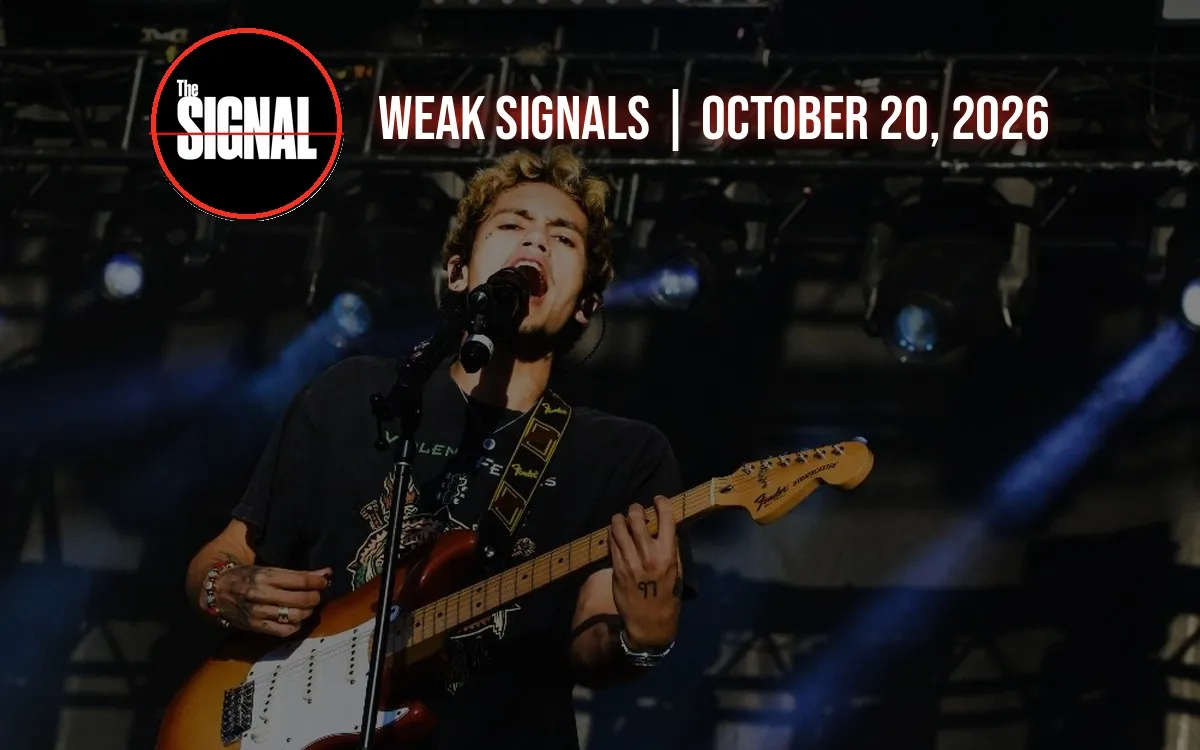
Dominic Fike made "Babydoll" in 2018 and released it that October on an EP literally titled Don't Forget About Me, Demos. It was never promoted as a single. It sat in his catalog for eight years. This month, carried by a wave of covers and remixes on TikTok, it holds the No. 1 spot on Spotify's global chart.
THE SIGNAL
The catalog is no longer the archive. It is the front line.
Babydoll is not a legacy hit enjoying a nostalgia bump. It is outperforming songs that were written, focus-grouped, and marketed for this exact moment, and it is doing it for the second time. The song first resurged in early 2026, when TikTok discovered it and Columbia Records rushed it out as an official single on February 27, eight years after the demo appeared. It passed a billion streams on Spotify in March, climbed to No. 16 on the Billboard Hot 100, Fike's first top 20, and topped Spotify's US chart in April. Now, in October, a second wave of covers and remixes has pushed it to No. 1 globally.
One demo, recorded with no budget and no plan, has now had two separate chart lives in a single year.
THE EVIDENCE
The numbers are not subtle. A billion streams for a song that was never worked as a single. A 4x Platinum certification for a track from a demos EP. The 2018 EP itself cracked the Billboard 200 in 2026, pulled in by its own third track. Fike's new single "White Keys," released alongside the Babydoll reissue, rode the same current onto the Hot 100.
And the mechanism matters. This wave is not driven by the original recording alone. It is driven by other people: covers, remixes, thousands of creators reinterpreting a 100-second demo and feeding the algorithm fresh versions of the same song. The audience is doing the marketing, the remixing, and the re-release strategy, for free, eight years late.
"Before algorithms, before other people's words. It's probably already there." (Dominic Fike, on the song he made in 2018)
THE INTERPRETATION
Fike wrote that line about his own life, but it reads like a description of the new music economy. The industry's model was built on release week: the premiere, the push, the peak, the decline. Streaming quietly abolished the decline. Every song ever uploaded now sits in a permanent catalog, fully distributed, waiting for a context that did not exist when it was made. Babydoll did not change between 2018 and 2026. The audience did, the platform did, and the song's moment simply arrived twice.
That inverts who holds the power. A label used to decide which songs got a second chance. Now the second chance is decided by teenagers covering a demo in their bedrooms. The most valuable catalog asset in music this month was recorded under court supervision, and no A&R department on earth would have scheduled its peak for October 2026.
THE WEAK SIGNAL TO WATCH
Watch the demo economy. If unfinished, unpromoted recordings can out-chart finished campaigns, the incentive structure shifts: artists will release more, polish less, and treat every upload as a lottery ticket with no expiration date. Labels are already mining back catalogs the way they used to mine new signings. The next shift is mining demos that were never released at all. Somewhere in a hard drive in Florida, or a voice memo in Ohio, is a No. 1 song from 2019 that has not had its October yet.
THE PREDICTION
Within two years, a major label will run a dedicated catalog-resurrection division whose entire job is monitoring TikTok for dormant songs and reissuing them within days of ignition. Babydoll's two chart lives in one year will be the case study they open with. The demo is the new single. It just does not know its release date yet.
CULTURE INDEX SCORE: 32/40
Virality: 10/10 Cultural Impact: 7/10 Longevity Signal: 9/10 Industry Disruption: 6/10
Dominic Fike wrote Babydoll before anyone was watching, in a room he was not allowed to leave. Eight years later the whole world found it, twice. The lesson for every artist sitting on unreleased work is the one Fike posted himself: it is probably already there.
SOURCES
Song history: "Babydoll" written and recorded while Dominic Fike was on house arrest in Florida; released October 16, 2018 as a track on the EP Don't Forget About Me, Demos; not promoted as a single; Fike's own account via Instagram. Wikipedia, Naples News, Last.fm Resurgence: TikTok virality in early 2026; re-released as a single by Columbia Records on February 27, 2026 alongside "White Keys"; surpassed one billion Spotify streams on March 16, 2026; peaked at No. 16 on the Billboard Hot 100; No. 1 on Spotify's Top Songs USA chart in April 2026; top two peak on the Billboard Global 200; certified 4x Platinum by the RIAA; the 2018 EP entered the Billboard 200 in 2026. Wikipedia, Naples News, AllMusic, Last.fm Current chart position: No. 1 on the global Spotify chart in October 2026, driven by a wave of TikTok covers and remixes; described as Fike's first-ever No. 1 on that chart. whatlisten, tracks of the week, week of October 16, 2026